



People love to beautify their homes, and if it brings extra protection, who would not try it? Fences can add curb appeal in terms of beauty and also safety. People who search for homes often think about their kids' and pets’ safety. This is why safety is always on their minds, where they prefer homes with fences. Likewise, every real estate company knows the worth of a residential fence exporter for that reason. This huge contribution from fences in the real estate sector makes them an essential part of every project.
End users, real estate brokers, and construction companies are often in search of durable, aesthetic, and budget-friendly fences for these reasons. So, here is the guide for such buyers who are looking for residential fence types for each climate.
You can find residential fencing rails & posts in metal, wood, aluminum, and plastic types. These are common residential fence types, and all have pros and cons. Selecting one of them requires some factors like durability, weight, strength, resistance level, etc. Here are those types in detail.
This is one of the most common and most durable fencing types in every sector. Even if you want to select for residential installation, it is a heavy-duty type for you. Besides, it offers cost-effective results through its budget-friendly installation and high returns. Residential chainlink fence fabric requires low maintenance, which is a bonus. It can even survive moist conditions through galvanization and vinyl coating. However, it offers less privacy because of its mesh-type structure.
Chain link fences have gates that make them more robust and safer for all. These gates are suitable for someone who does not want any risk of trespassing or intrusion from unknown humans and wild animals. The galvanization provides rust resistance for long-term performance for decades.
This is the core of the fence, and it is known as chain link mesh. It provides safety to owners as well as a safe containment for pet dogs. A thick mesh provides better protection against intruders who try to use tools to cut the mesh. Such residential chainlink fence fabric must be thick if someone suspects threats from nearby places. Also, people in rural areas like to install it to protect their livestock from wild animals. A residential fence exporter with a wide variety can offer such fences.
The third factor of chain link fences is about rails and posts. These two have to be very durable and robust against impacts and weather threats. They provide the support to mesh for long-term protection against all threats. So, besides chainlink fence fabric, you will need rails and posts for complete protection.
The first type was really long, but that was all about the highest protection level. The next is wood fencing, and the most common types are cedar, bamboo, and redwood. These types of wood can survive weather and impacts better than other wood types. If you want a beautiful and evergreen fencing solution, this one is a really fine option. It can add an aesthetic value to your home’s curb appeal. You can choose natural wood color or even custom paint on it. It also provides more privacy since it has no mesh.
Besides, wood fences are affordable, durable, and easy to repair. What you should keep in mind is that they require more maintenance against moisture, pests, and rotting. Also, they are not suitable for highly moist climates and require special coats to survive.
Then there is a lightweight and aesthetic fencing type, which is made of aluminum. You can get a smooth surface and shine from it, which enhances the home’s curb appeal. Likewise, aluminum fences can provide more privacy since their panels are also available in a wider width. What makes them really durable is their rust-resistant nature. There will be no impact of rain and snow on them.
Also, they can withstand UV rays, because some materials start facing degradation from UV rays. Many residential fence suppliers have aluminum fences with custom colors and wood themes.
However, they offer less impact resistance than steel. Also, they are costlier than steel mesh, wood, and plastic fences.
Then you can find plastic fences, which are low-cost and lightweight types. They are more suitable for people who want fences for beauty more than safety. HDPE and PVC fences provide a beautiful appearance through custom colors and themes. They can mimic wood fences through wooden shades. HDPE and PVC fences have no threat from water at all. Due to their wide panels, they offer privacy just like wood and aluminum fences.
However, they offer less impact resistance than others. Also, they have the least UV resistance among all material types.
There are some factors that you need to keep in mind. Whether you procure from a residential fence exporter or a retailer, you need to follow these considerations. Know the purpose, safety level, cost, resistance level, and dimensions. Then you can select the right type of residential fences. Here is how you can do that.
Are you installing fences for the safety of family and pets or for the beauty of your home? Maybe you want both functions, and you will have to select accordingly. Choose residential chain link fence fabric if you want protection from trespassers and wild animals. They can also help you contain your pets, like larger breeds of dogs, and even livestock. However, you can choose wooden, aluminum, or vinyl fences for the sake of the beauty of your property.
People install them for the safety of their backyards, front yards, pool areas, and play areas. So, you should consider the material type based on your purpose.
If you need to install fences for basic protection, you can choose both metallic and non-metallic fences. Wood, plastic, and aluminum are more suitable for aesthetics and basic protection from regular people. If you want high protection, residential fencing rails and posts with meshes are the best. Their residential chainlink fence fabric will prevent humans and animals. Just keep the thickness and height of meshes, rails, and posts in mind.
The cost depends on the material type and the length of the fences. Wood and plastic (vinyl and HDPE) fences are very cost-effective choices. If you want to procure metallic ones from a residential fence supplier, you need a higher budget. They are costlier, especially the chainlink mesh fences.
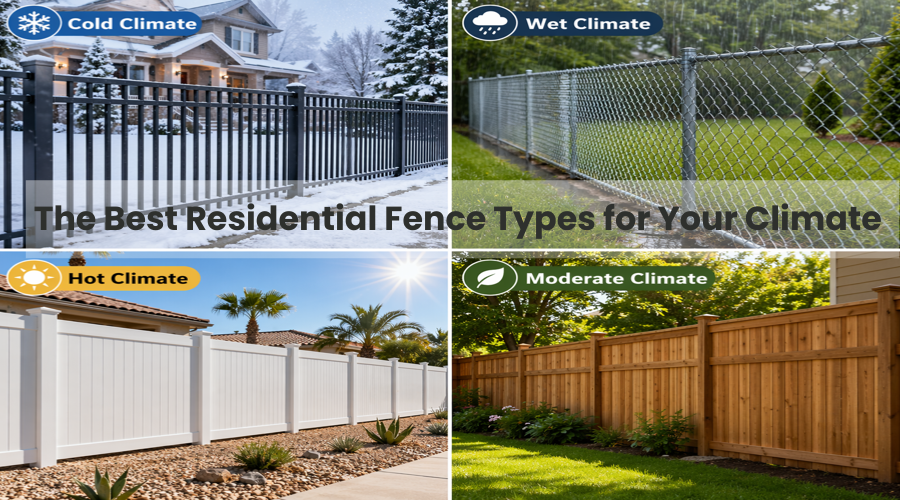
Keep the climate in mind because choosing incompatible materials will ruin your investment. If you live in a moist climate, choosing wood fences will be a bad idea. Despite having protective coats, wood fences will struggle against continuous moisture. Rainy and snowy climates or installation near pools will require plastic, aluminum, or galvanized-steel fences.
If you live in a scorchingly hot climate, plastic fences will possibly degrade soon. They have the least UV resistance to UV rays and heat.
Standard fence height is from 4 ft to 6 ft. You can choose higher fences depending on the average height of people in your region and safety measures. Residential fencing rails & posts need to have higher thickness if you want higher protection against break-ins. Thick meshes can resist metal cutters. When sourcing from a custom residential fence supplier, you can also choose the width of panels, and wider ones will provide more coverage for privacy.
Before selecting the fences for the installation, you should know about the regulations. Homeowners’ association and some similar conditions exist. You will have to follow these regulations because each region or municipality has a specific height standard for fences. You will have to contact your local government representative for that.
You need to know about the residential fence types, regulations, suppliers, and weather conditions. These details will help you select the best fence type for your property. It is about safety and also the home’s beauty, which is why people install fences. Since there are different types of them, you need to select them as per your purpose. Then, dimensions and other properties will also be part of the selection process.
How Long Does Fence Installation Take?
It could take one day or even two or three days, depending on different conditions. The size of the property, the expertise of the installation team, and the ground conditions will affect the installation time.
What Kind of Fence is the Best for Property Value?
Wood and aluminum fences are for basic-level protection and privacy. They also increase property value without any doubt. If you want to increase property value in terms of high protection, choose galvanized mesh fences.
Do Residential Fences Require Any Permit?
Yes, they require a permit for installation. You will have to follow municipality rules, and you will require permission from the local government. Each region and town has a standard height of fences, and you will have to install within that range. Even a team from the local government will come for the inspection.
Is a Backyard Fence Worth It?
Yes, they are worth it. People who want to make their backyards safe from strangers or animals install backyard fences. They will prevent wild animals from entering your backyard if you live near a forest. People install steel-mesh residential fencing rails & posts or wooden fences often.
Do Fences Lower Property Value?
No, they do the opposite. They add value and pay off over 30% of what you spent on fences. Buyers want homes with fences for safety and privacy, which makes fences a positive factor in the property value.
How Long Do Fences Last?
It depends on the material of the fences. Aluminum and galvanized-steel fences could last over 25 years. Residential fencing rails and posts with PVC coating have the same performance. Wood fences have the least durability, where they could last a maximum of 10 years or 15 depending on maintenance.
Good-quality, solid fencing is essential to commer
READ FULLPeople love to beautify their homes, and if it brings extra protecti
READ FULLWhen a chain link fence fails, most people blame the wire. They shou
READ FULL